BRAGG CREEK
EDUCATION SERVICES REVIEW
Independent parent account

OUR FAMILY’S EXPERIENCE WITH BCESA

Bragg Creek Education Services labelled our child with Code 44:
“Severe Physical or Medical Disability.”

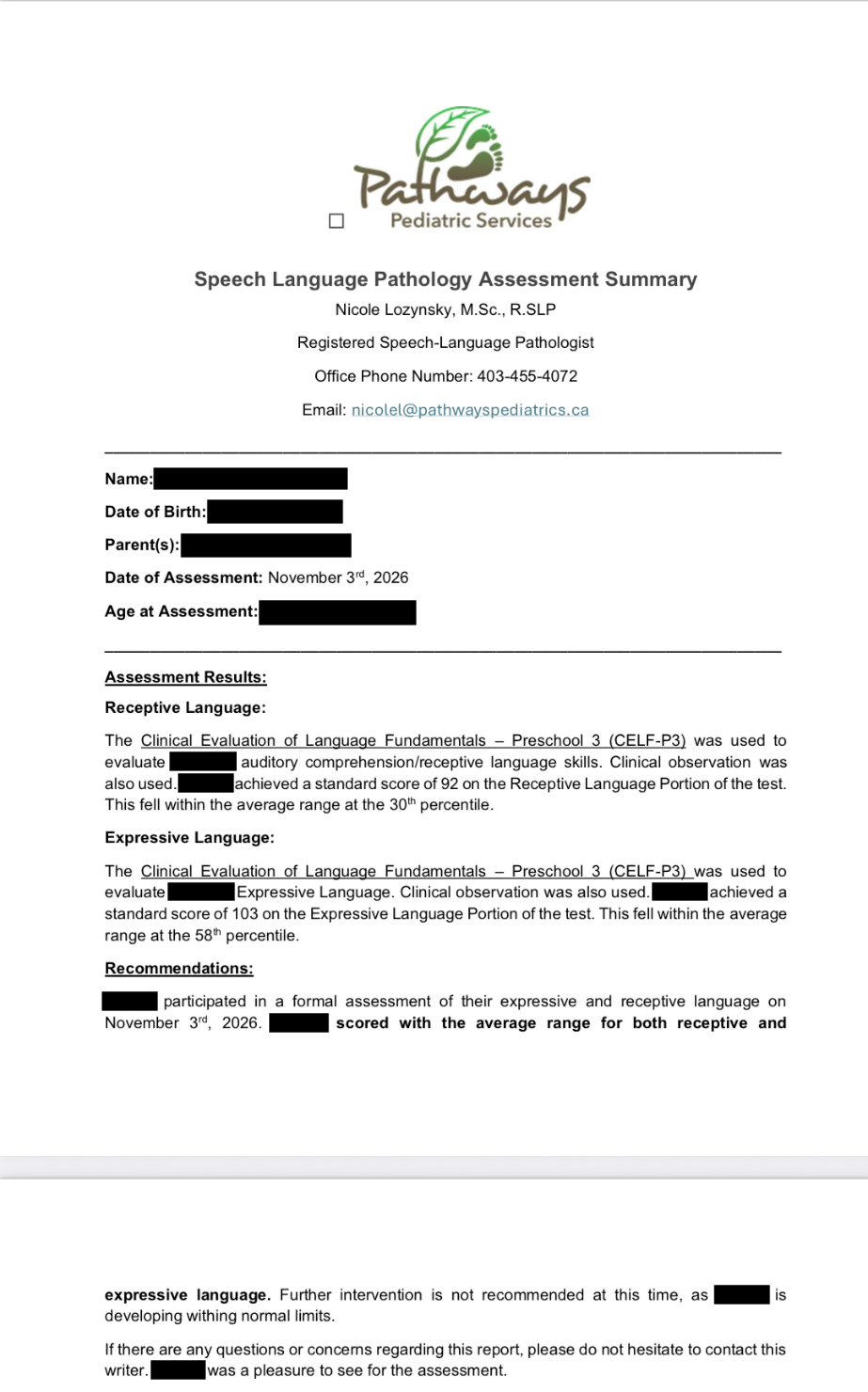
Our son had only just turned four when this began. We knew him as a typical young child who could be shy. That is our account of the child at the centre of this review. The later independent language assessment found that he was developing within normal limits and stated: “Further intervention is not recommended at this time.” Read the November 3 assessment.

BCESA placed our child in a severe-disability category whose published examples include cancer, brain injury and cerebral palsy. The category requires severe educational impact and extensive support needs. Sharing the code does not mean sharing those diagnoses. Read the definition and official examples.

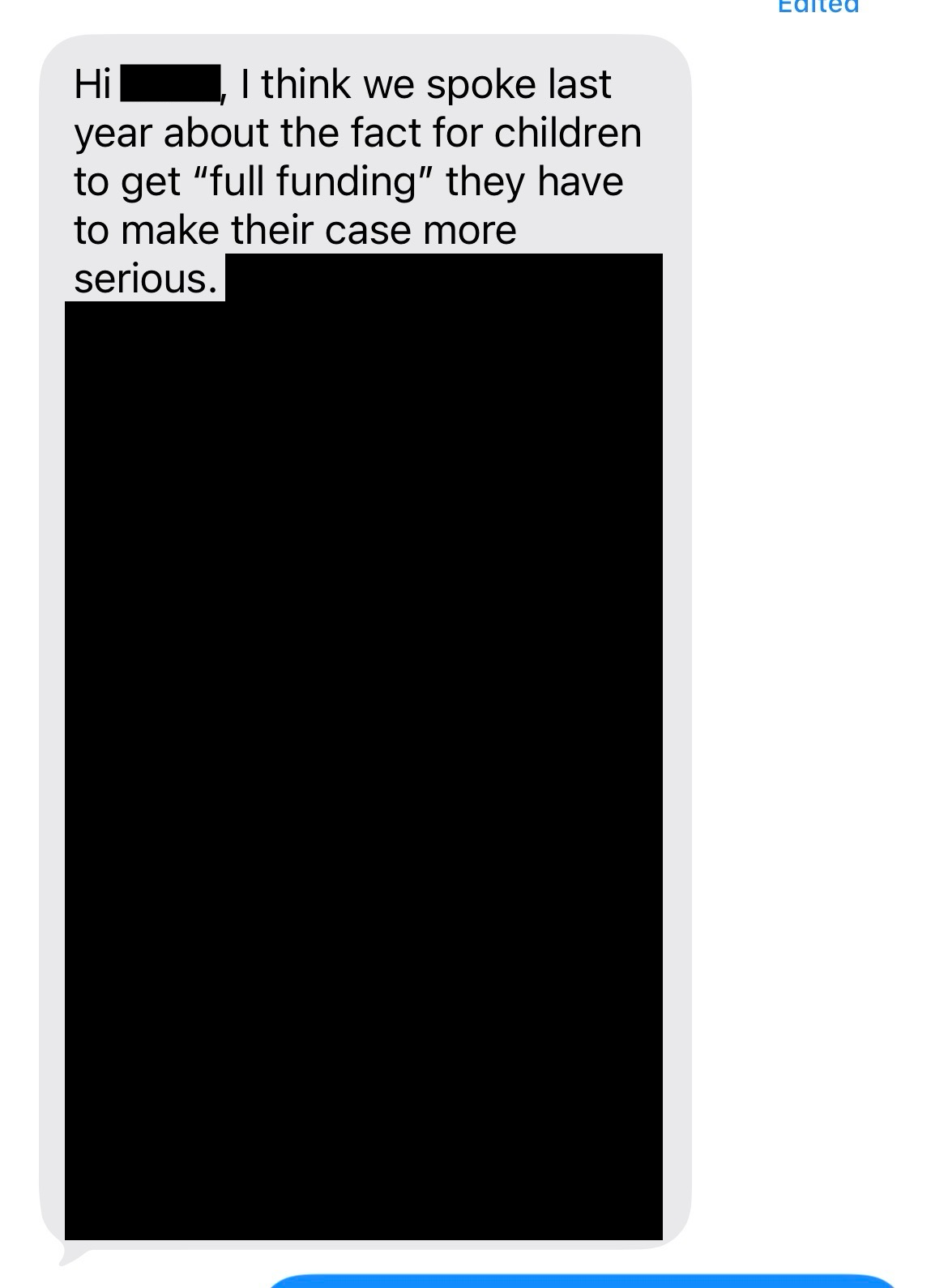
A message sent to our family said children’s cases had to be made “more serious” to receive full funding. The reported full-day grant rate for severe disability is over $31,000 a year. BCESA received no funding for our child. We stopped the process before payment. Our concern is the funding sought and the coding used to pursue it. A subsequent independent assessment found average-range language skills.

INDEPENDENT SLP · 3 NOVEMBER 2026“Further intervention is not recommended at this time”

The independent assessment found our child was developing within normal limits. Read the redacted assessment.

“MORE SERIOUS” TO RECEIVE “FULL FUNDING”

Over $31,000 a year in potential funding. Read what we were told.

Potential annual severe-disability PUF grants · 2026–27 · Canadian dollars

$18,731.79Half-day program
$31,219.65Full-day program · at least 800 hours

The message sent to our family says that for children to get “full funding” they have to “make their case more serious.” Those are the words in the screenshot. Our child was assigned Code 44. We want BCESA to explain why severity was described to us in terms of securing funding. Read the redacted message.

The later independent SLP assessment found development within normal limits and stated: “Further intervention is not recommended at this time.” That November 3 finding is central to why we dispute the earlier severe description. Read the independent assessment.

These are grant rates reported by AUVIE’s funding guide. Our family stopped the process before payment; BCESA received no funding for our child. These figures describe potential grant rates. Eligibility, program hours and allocation rules apply. Sources and verification status.

THE PEOPLE BEHIND THE DECISIONS AND RESPONSES

Why we are holding these four people accountable.

We believe BCESA failed our child and failed to take responsibility. Our criticism concerns Hannah Schmitt’s assessment, Michelle Roberts’s reported assurance, Michelle Thompson-Blair’s initial review and the board response signed by Allison Smith.

Our funding concern: the message about making cases “more serious” to receive full funding is central to why we question the designation. It does not establish each person’s motive or personal financial gain. BCESA received no funding for our child. We stopped the process before payment. Read the redacted message.

REPORT AUTHOR · DOCUMENTED

Hannah Schmitt

An informal assessment. A written report after the coding decision.

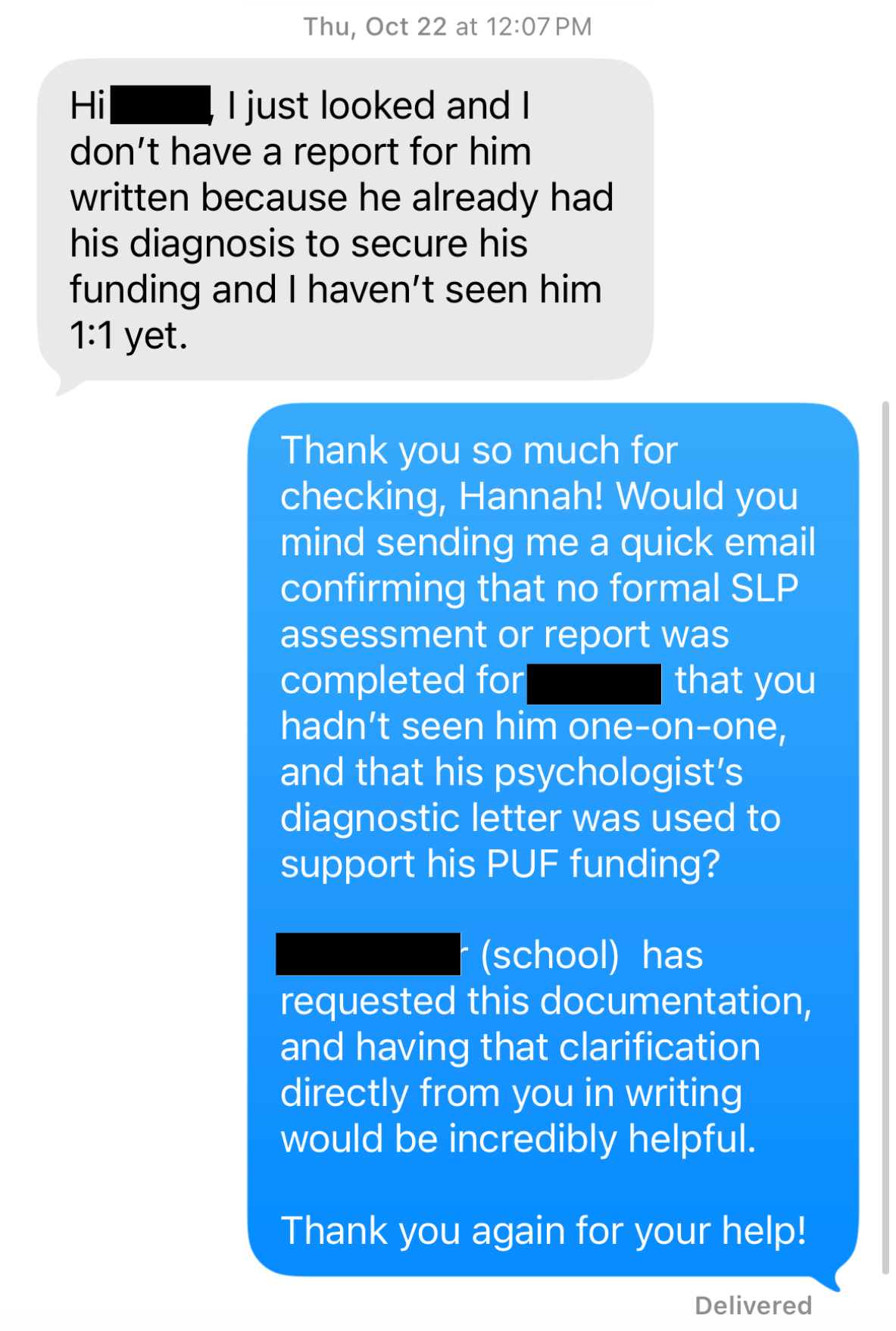
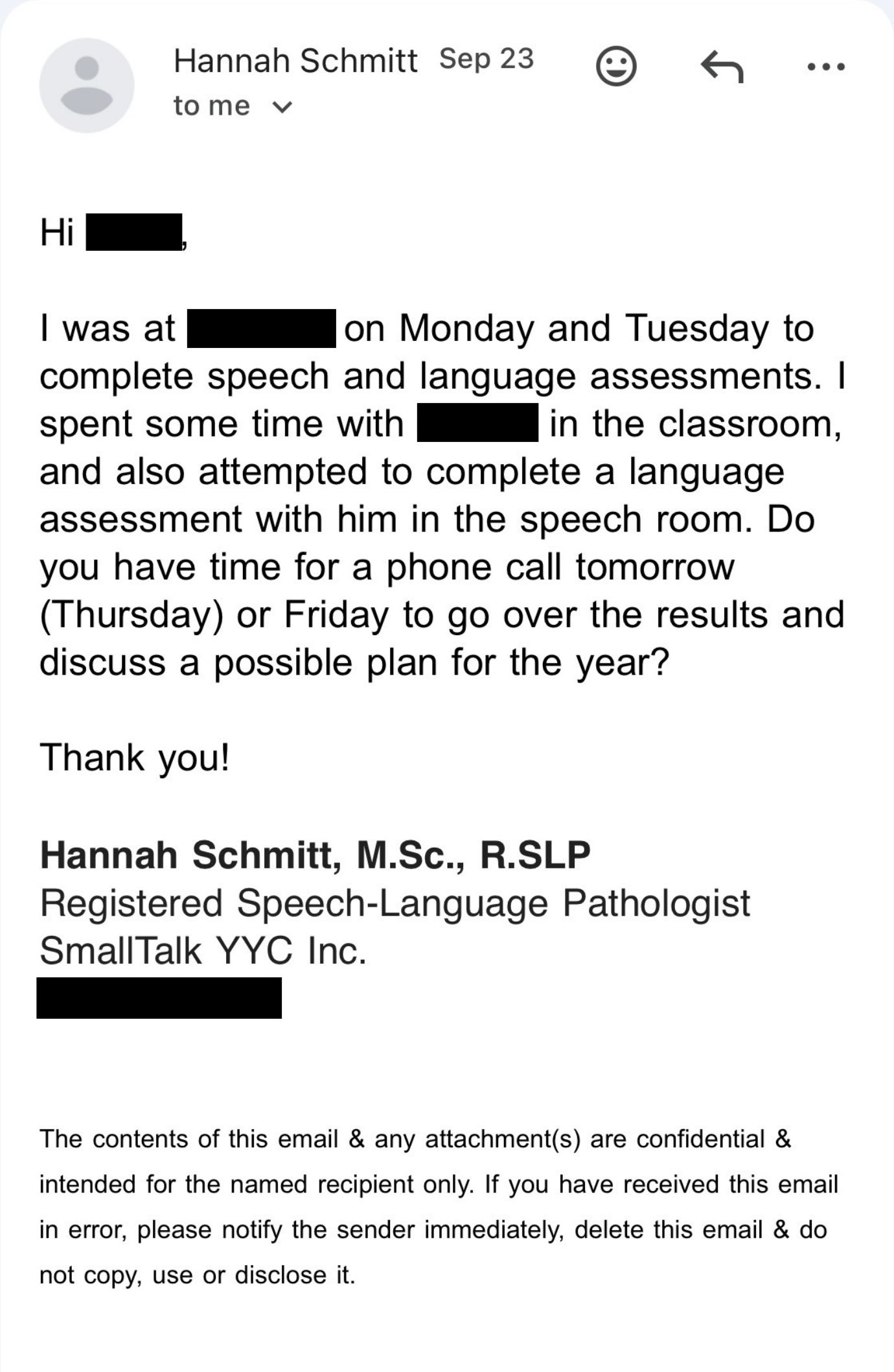
On October 22, she told our child’s mother in writing: “I don’t have a report for him written because he already had his diagnosis to secure his funding and I haven’t seen him 1:1 yet.” Read her message.

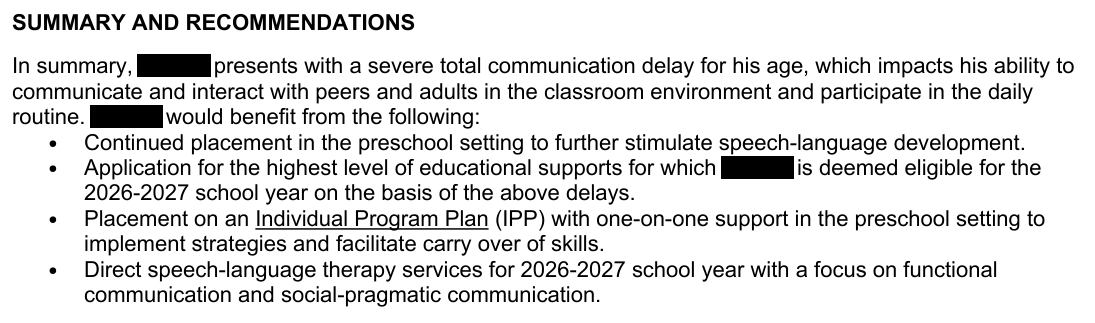
Her October 26 report described a severe communication delay using “Informal play-based interaction in place of formal assessment,” alongside consultation and classroom observation. The written report came after the September 29 coding decision and the October 23 grievance. We do not believe that report justified the severe description of our child’s needs. Read the assessment methods.

The independent November 3 assessment found our child was developing within normal limits: “Further intervention is not recommended at this time.” Read the later formal findings.

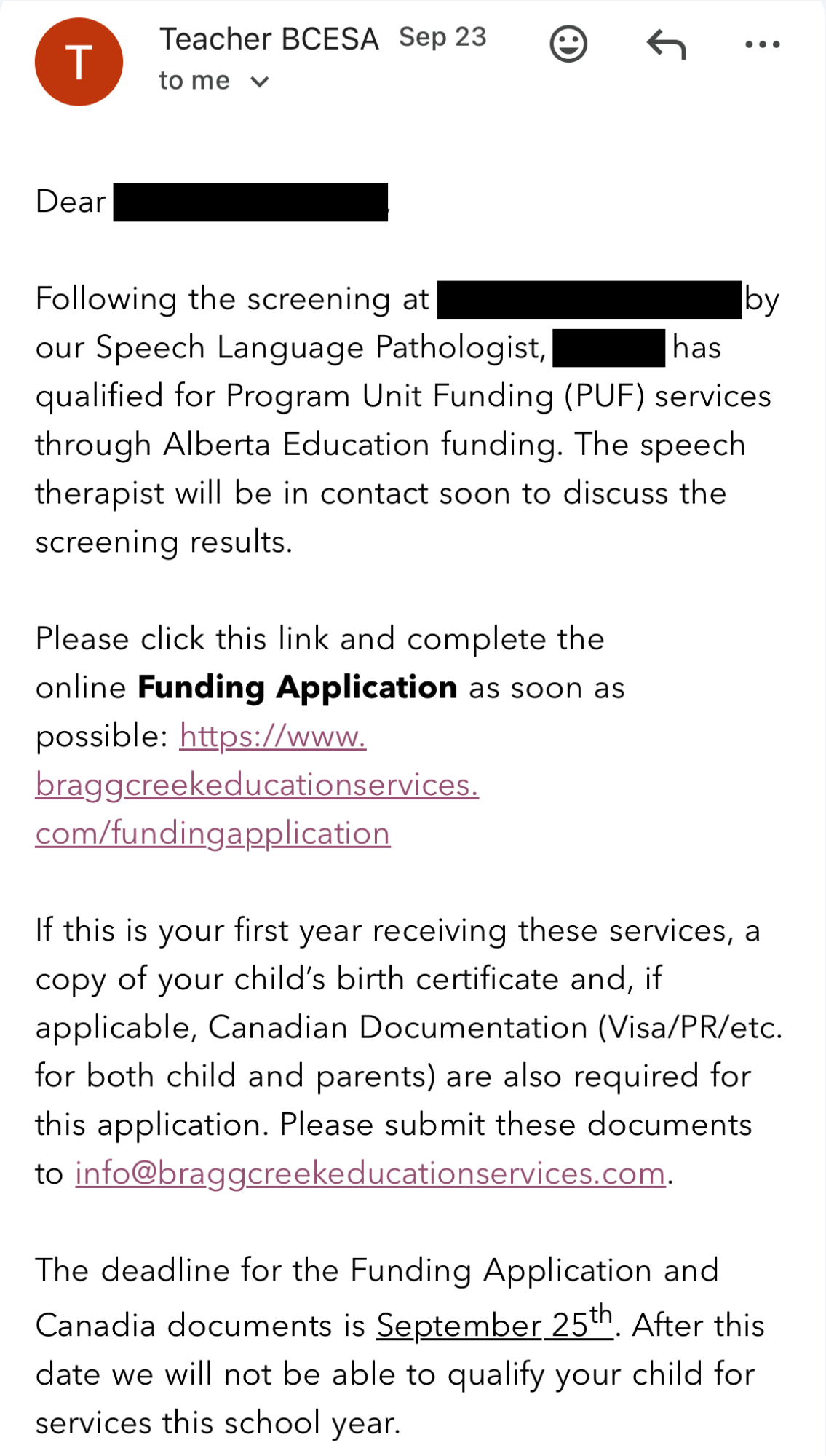
The report lists September 22 as the assessment date; our timing criticism concerns when the written report was produced. The September email describes an attempted assessment. The board accepted that “1:1” referred to therapy.

Messages, methods and chronology

EDUCATION COORDINATOR · FAMILY ACCOUNT

Michelle Roberts

Michelle Roberts said she would change the code.

Michelle Roberts told our child’s mother she would change the code. Our account is that BCESA subsequently asked the government to remove the application entirely. Our concern is why the severe designation was assigned in the first place.

This is our family’s account of the conversation and the later removal request, not a recorded quotation. The request to remove the application is distinct from the board’s account of active-code removal and retained history.

Our account and the board’s record

DIRECTOR OF OPERATIONS · FAMILY ACCOUNT

Michelle Thompson-Blair

We reject the initial review’s conclusion.

Our recollection is that she handled the initial internal review and told us she found no wrongdoing. We reject that conclusion. We still did not have an explanation we could accept for the code or the evidence behind it.

Her original response is not attached. This is our account, not a verbatim quotation.

Read the accountability record

BOARD PRESIDENT · SIGNED RESPONSE

Allison Smith

The board upheld the code. We still disagree.

She signed the board response upholding the coding decisions. Yet the board said the evidence did not establish that the specific code and its implications were clearly explained beforehand. We reject the board’s conclusion. We cannot accept that the board upheld the code when it could not establish that the code and its implications had been clearly explained to us beforehand.

The letter approved process changes without a finding of wrongdoing. It does not give implementation deadlines. It says the independent report was not provided to the board.

Read the signed board response

Professional website: Kinship Impact Partners · Currently displays “Private Site.”

INDEPENDENT SLP ASSESSMENT · 3 NOVEMBER 2026

Hannah Schmitt described a severe delay.
Independent SLP: developing within normal limits.

INDEPENDENT SLP RECOMMENDATION · 3 NOVEMBER 2026Further intervention was not recommended at that time.

Hannah Schmitt’s October 26 report: a severe total communication delay in the educational setting, based on informal play-based interaction, consultation and classroom observation. Read her methods and report.

Nicole Lozynsky’s November 3 assessment: formal CELF-P3 testing and clinical observation at Pathways Pediatric Services. Her summary states that our child was developing within normal limits.

We do not believe the informal assessment described in Hannah’s report justified characterizing our child’s communication delay as severe. The later formal findings reinforce our rejection of that severe characterization. Our child deserved a conclusion supported by a clear and convincing assessment of his actual needs.

On October 22, Hannah wrote: “I don’t have a report for him written because he already had his diagnosis to secure his funding and I haven’t seen him 1:1 yet.” Her report describing a severe delay is dated October 26, after our grievance and after the September 29 coding decision. We question whether that report was an after-the-fact justification for a severe designation already assigned to our child.

The assessments used different methods and settings. The board’s letter says the independent report was not provided to it, so it did not consider that report. Read page 1.

Read the redacted reassessment
92Receptive language
30th percentile
103Expressive language
58th percentile

Findings from the November 3 language assessment. Read the comparison and context.

BEFORE YOU CHOOSE BCESA

Before you trust BCESA with the future of your child, read the record.

Based on our family’s experience, we would not recommend BCESA. We were left challenging a severe designation assigned to our child and the evidence used to support it.

Its own board said the evidence did not establish that the specific code and its implications were clearly explained to us before entry. Parents deserve to see that record before placing their trust in BCESA.

Read the coding issue and the board’s findings

WHY WE ARE SHARING THIS

We believe BCESA failed our child.

A severe-disability designation carries consequences for a child’s educational record and opportunities. Our family was left challenging a designation we dispute, its implications and the financial incentive behind it.

We believe BCESA failed to provide the transparency and accountability a decision this consequential demands. We are publishing the records because parents deserve to know what is being recorded about their children, why, and what funding is being sought in their names.

Examine the decisions and supporting evidence

REVIEW TOPICS

What happened and the records behind it

Choose an issue. Open the source.

THE FUNDING MESSAGE Documented wording

What did “more serious” mean?

The message explicitly connects “full funding” with making a child’s case “more serious.” Only the opening sentence is displayed; the rest of the message is redacted.

We want BCESA to address those words directly. Who determined the severity, what evidence supported it, and what funding was sought before we stopped the process?

The screenshot contains no sender header or date. It documents the wording; it does not establish the amount sought or deliberate misclassification. Our account is that we stopped the process before any funding was paid.

Source document
Redacted message excerpt linking full funding to making a child’s case more serious. The recipient’s name and all text after the opening sentence are blacked out.
The “full funding” messageOpening sentence only · remainder redactedOpen document

SEPTEMBER TO NOVEMBER 2026

What happened, in date order

See the complete timeline
  1. Code 44 enteredDate stated in the board’s response.
  2. “I don’t have a report”Date displayed in the SLP message.
  3. Grievance receivedReceipt acknowledged by the board.
  4. SLP report datedThe report lists a September assessment.
  5. Independent SLP assessmentAverage-range language scores. Read the findings.
  6. Board responseThe family remains dissatisfied.

BCESA’S POSITION

BCESA’s response to our complaint.

In our view, BCESA’s internal review failed to hold its staff accountable. Our complaint questioned whether funding had influenced the description of our child’s needs. We do not think the organization’s review answered that concern. Promising changes did not settle our complaint about what had already happened.

Of twelve issues, eight were not upheld, one was indeterminate and three led to process improvements without a finding or admission of wrongdoing. The board upheld the coding decisions.

The letter lists proposed changes, but does not provide implementation deadlines or name the person responsible for each change. It includes a coding-decision checklist, clearer documentation and report-timing expectations, a standardized records process, training and board follow-up. We want to know when those changes take effect and how completion will be verified.

Read the complete redacted response

THE DOCUMENT COLLECTION

Read the messages and documents

Original messages, emails and document excerpts. Family identifiers are redacted. Professional names remain where discussed.

SOURCE MATERIAL

Document